Associação de Plantas e Jardins em Climas Mediterrânicos Mediterranean Gardening Association Portugal

Garden Visits Spring 2019 – 1: Estoi and Santa Barbara de Nexe


Dia da Liberdade – 25 April was chosen for the first of the Spring Garden visits.

There is nothing more inspirational in gardening than visiting gardens and seeing what other people are doing and what plants they are growing, and talking to the gardeners themselves. This year we were lucky enough to be invited to visit several private gardens in the Algarve in three different soil areas: littoral (coast, sand), barrocal (inland, clay and chalk) and serra (acid). This allowed us to see what gardeners could grow and what difficulties and successes they had in these very different conditions.

Towards the end of April, we visited two gardens in the East of the Algarve, one near Estoi and the other near Santa Barbara de Nexe, both in the Barrocal. The gardeners of both these gardens had incorporated the existing plants and landscape into their gardens and used minimal watering in their care.
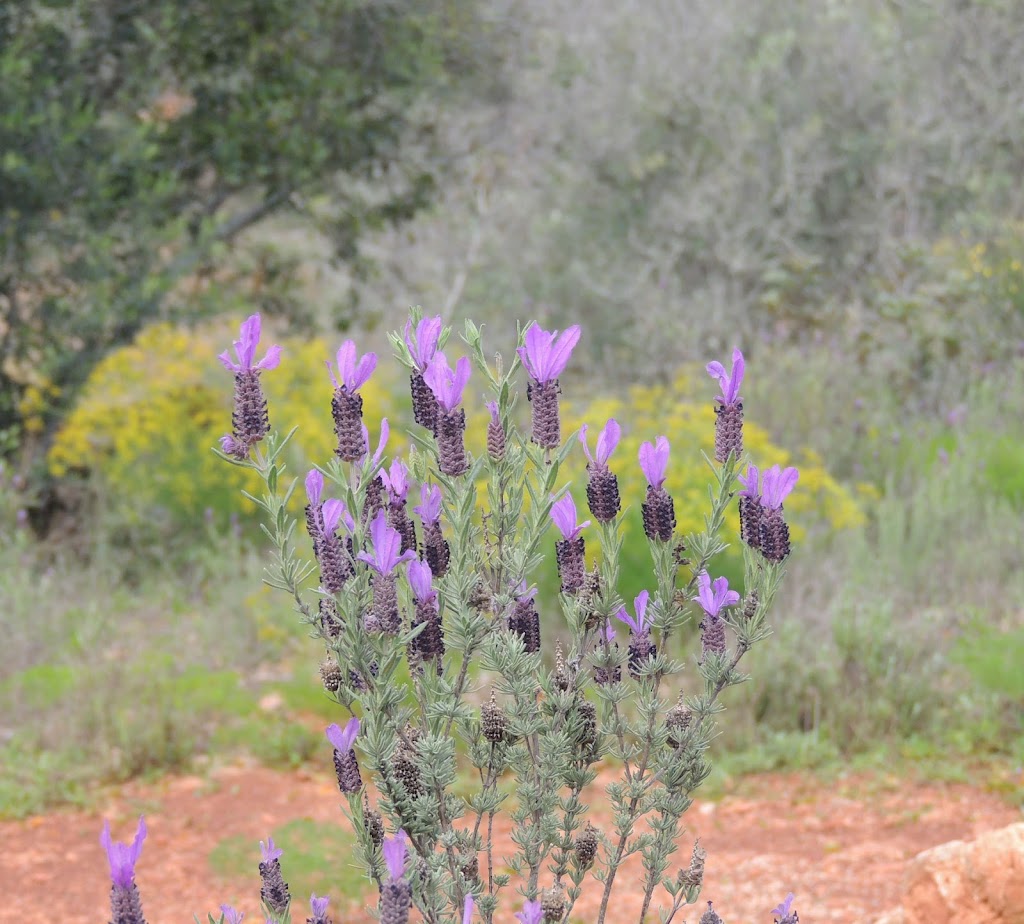

Lavandula luiseri
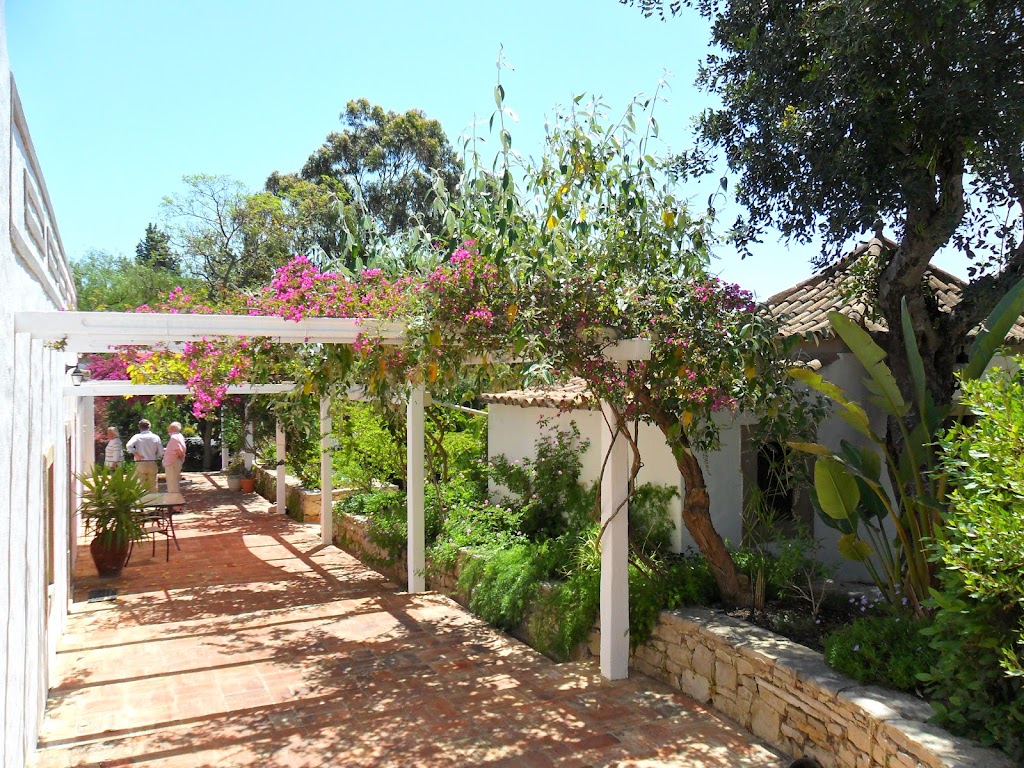
Like most barrocal gardens, Lynn and Kelvin Cooper´s near Estoi is stony, compact clay on a bed of limestone. When planning the garden, Kelvin decided to leave most of the land as it was, so as to preserve the existing flora. They therefore have a wonderful display of wildflowers in the spring, including the Algarve narcissus (Narcissus calcicole). The area around the house is more traditionally planted with an eclectic mix of Mediterranean plants, such as polygala, eriocephalus, lavenders, rosemary, plus various succulents. Many of the original shrubs and trees, however, such as Strawberry Tree (Arbutus unedo), Lentisk (Pistacia lentiscus), oaks and carobs, have been left, including a huge, ancient carob. This mixture of existing plants and new additions suitable for the dry conditions was a good demonstration that it is not always necessary to clear the land before developing a beautiful garden.

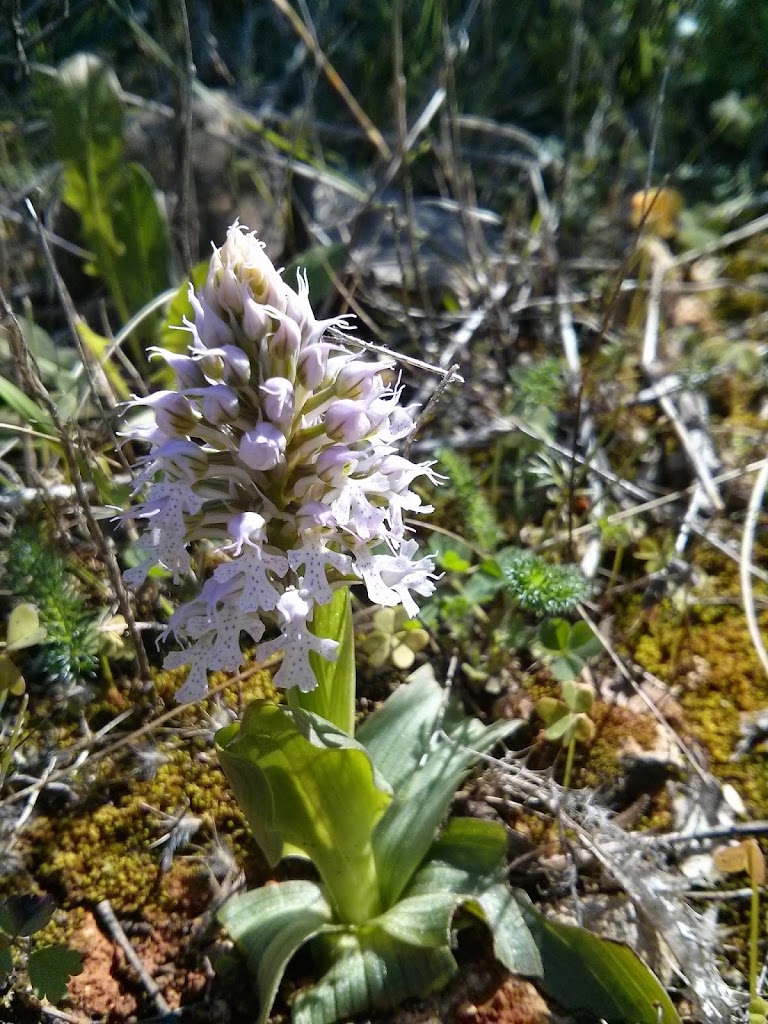
Ophrys italica
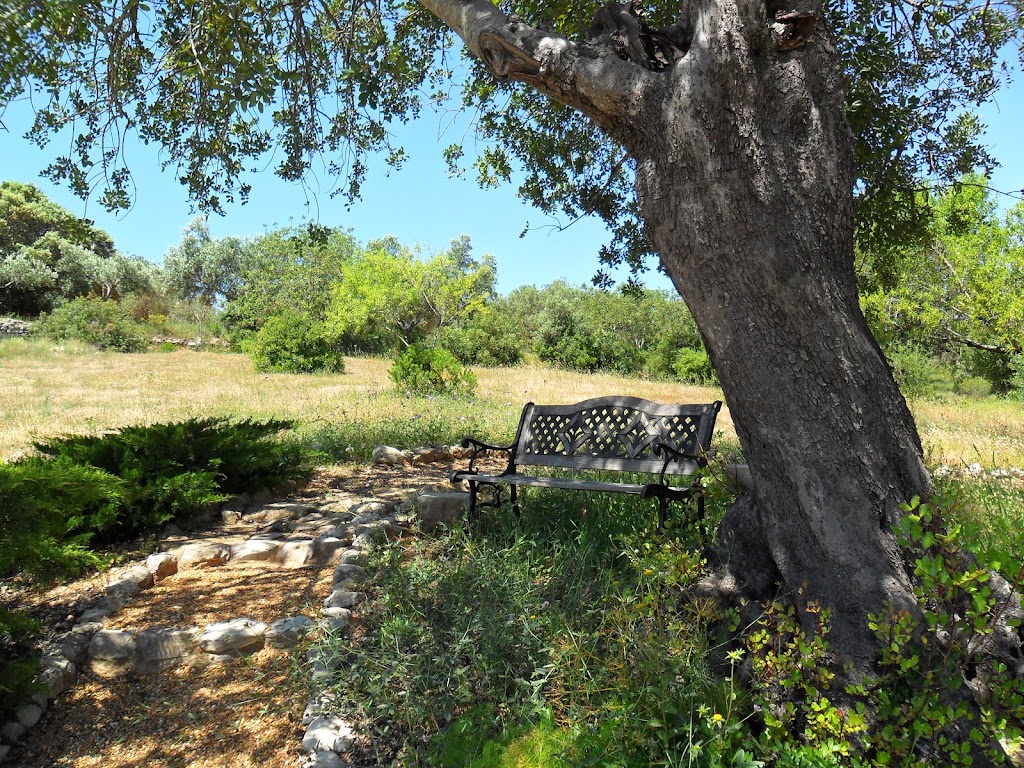
In a similar way, Janet and Edward Goldman have a cultivated area near the house and wilder, less cultivated or uncultivated land further away. What looks like lawns in winter is in fact wild grass and flower meadow.
Edward and Janet garden views

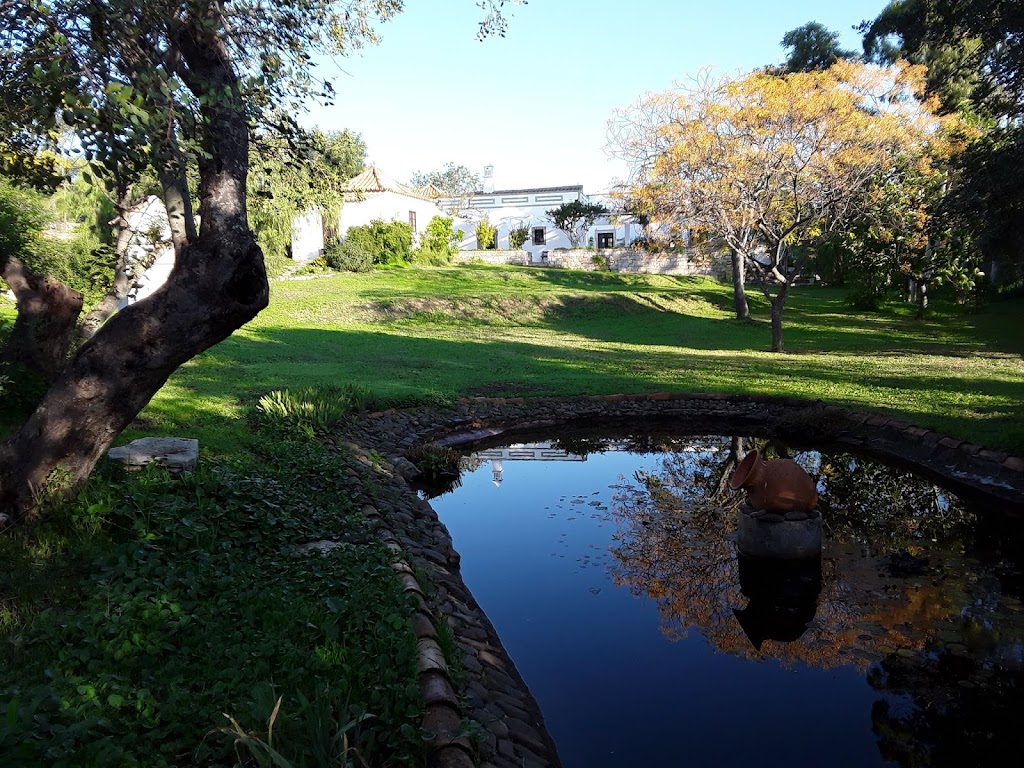
Janet and Edward have a very restricted watering regime for a pragmatic reason: their bore hole is not very productive, especially in the summer, so they fill a tank in the spring to last until November, which is enough for pots and needy plants around the house but nothing else.* This has the advantage that the conditions in the land away from the house are ideal for native plants, in fact they are improving as the land becomes less fertile. Before they moved in years ago, the land was used for horses, so the grass was fertilised to provide fodder. Now they just mow parts of it in the winter and all of it once in late spring, so the fertility is reduced and the seeds returned to the soil. Consequently, they too have a wonderful display of wild flowers including orchids and the yellow anemones in the spring, plus a whole field of thyme. Around the property, they have over twenty-one types of tree, including two Pistacias, a Melia azedarach, two Eucalyptus, two Ficus, a Tipuana tipu and many others. Around the house, scent was provided by both the jasmine and the Star Jasmine (Trachelospermum jasminoides), the frangipani was beginning to shoot, violas colonised the raised bed and Navelwort (Umbilicus rupestris) and Ivy-leaved Toadflax (Cymbalaria muralis) covered the shady wall of the raised bed, surrounded by a multitude of other flowering plants.

Janet and Edward garden in winter
Several people have asked to revisit the gardens at different times of the year to see the changes, even the sesta period of the summer when all is brown and apparently dead. That is the wonder of seasonal gardens.

Thank you to Janet and Edward, Lynn and Kelvin, for welcoming us to your gardens and taking time to show us around.

(*An update from Edward: In fact, the bore hole is effectively dry in July. They could drill a new bore hole – they would need to drill about 350 metres down – and have a more typical garden with full irrigation lawns etc. However, they don´t want to do this as apart from the cost (their land covers about 10,000 metres, so it would take a lot of water), they would not be surprised to see restrictions imposed in the future. Also, of course it could be considered anti-social in current circumstances. Furthermore, they are in the Reserva Ecológica Nacional (REN) zone, where there are particular restrictions to prevent soil erosion, run-off causing flash flooding, etc. Therefore, they just top off the vegetation with the mower rather than rotavating. You can see a map of the REN by going to http://idealg.ccdr-alg.pt/aplicacoes.aspx .)
Tessa Hearn – MGAP Events Organiser
Translate »