Permaculture, where problems are seen as solutions
What do problems such as low rainfall, poor soil quality and increasing fertiliser costs have in common? They are all opportunities for a healthy thriving garden. How? Well, it all
depends upon how you design your garden.
 |
Since its inception in 1974 in Australia, Permaculture Design has become well known amongst those interested in sustainability and green living as one of the most rounded and fully developed
design systems available. Often described in error as a whole movement, or philosophy, it is simply a method of design with ethical principles. It can be applied to small- and large-scale developments and is most frequently applied on integrated
landscape and building designs. The result is an increasing number of people living with less or no dependency upon irrigation, fertilisers, supermarkets and costly utilities.
Permaculture design has several ‘design principles’ which must be adhered to, simply summarised as follows:
Within a system designed using permaculture there would be no ‘waste’ and a lot of ‘co-operation’ by the design elements. For example, when reviewing all of the physical elements within the design such as people, plants, landscape, house, and chickens, you review how
every element can interlink with another through inputs and outputs for each element.
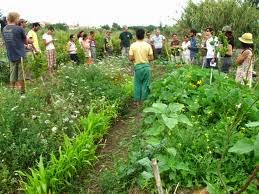 |
| Production on permaculture principles |
By promoting positive interactions in your garden, you create a lower maintenance design. Permaculture challenges the current methods of design. As Albert Einstein said, “We can’t solve problems by using the same kind of thinking we used when we created them.”
This all sounds lovely, but what does this actually mean in practice?
Take a typical house and garden design. Within such a design you will have an element called a human being which requires inputs of food, shelter, heat and water. They also produce outputs of urine and feces. These outputs can be safely and easily collected
and returned to use within the system through composting toilets, where after a year of ‘hot’ composting you are left with a rich, safe, organic matter that can be used around fruit trees. By closing the circle, we need fewer external inputs such as soil and fertiliser, whilst providing humus, increasing water retention in the soil and ultimately increasing productivity.
After designing within these principles, permaculture then uses techniques such as companion planting in gardening to fill out the design further.
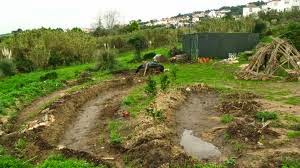 |
| Harvesting rainwater with swales |
Permaculture design can be applied in the smallest of
scales, for example, by merely choosing climate appropriate plants that provide many different functions.
Permaculture also provides a link to understanding the importance of traditional practices as well as how to engage with newer science.
There are many great examples of how effective permaculture design is in real life situations. Food forest gardens provide perennial foods that are very low maintenance, and very productive. The Transition Towns movement was based on permaculture design and is now global. The greenest homes on the planet, Earth Ships, use permaculture design and have been built and lived in now for decades. Deserts in Jordan are being made into viable crop growing areas without draining the precious aquifers of ancient, limited, fresh water in ‘Greening the desert’, a particularly amazing project by Geoff Lawton of
the Australian Permaculture Institute.
For the challenging climate here, permaculture design offers solutions. With good design, a shift of perspective, and lateral thinking, anything is possible. For example, placing
large, raised vegetable beds close to your back door, fed by grey water from your house, you can more efficiently harvest home grown food, and reduce irrigation.
Permaculture always advocates the choice of plants and trees which individually serve as many functions as possible, such as being edible, medicinal, timber, wind break, providing shade or fixing nitrogen. To this end the carob tree is a brilliant choice for longer term planning, and we can now begin to better understand its role in traditional Algarve agriculture.
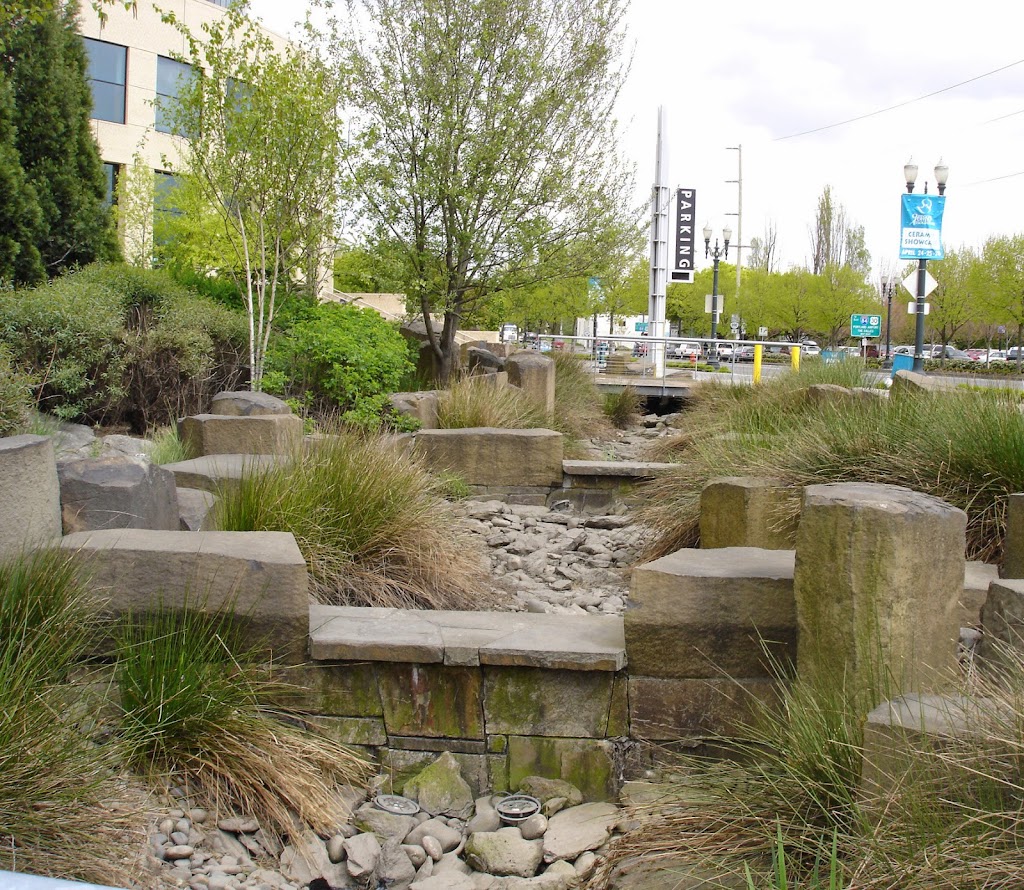 |
| Harvesting rainwater, and a garden |
Capturing water as high on your site as possible, before run-off, means that it can be as useful to you as possible whilst also storing it in the cheapest place possible on site: in your soil. The ideal permaculture design is one where you
can just sit back and watch it work for you, using natural systems.
Permaculture design offers a viable methodology for one planet living. Your local permaculture practitioner will be able to help with any questions you may have about applying permaculture design. If you are very interested in learning more, the first step for many people is a 72 hour
Permaculture Design Course. This provides the basic understanding required for applying the design.
The worldwide home of permaculture can be found at the Permaculture Research Institute Australia. You can find your nearest practitioner through searching their worldwide database. Enjoy the journey towards a more sustainable and better design
for living!
Posted by Douglas Peddle
November 2014