The launch of the Barrocal Botanic Garden, Mediterranean Garden Association Portugal
In May 2018, the Mediterranean Garden Association Portugal (MGAP) took the first positive steps towards establishing a botanic garden in the Algarve. The site of approximately 1,000 square meters in the Barrocal, on the gentle slope of a stony hill outside Silves overlooking soft valleys and distant hills, seemed perfect.
Although the area had been used agriculturally for the growing of carobs and almonds and possibly other crops, that was generations ago, and the site had long since reverted to the local vegetation. An additional plus was that as part of the established organic farm of Quinta da Figueirinha, the site is already on protected land with well documented soil and weather data.
After careful thought and planning, a start was made in January 2017 to mark the layout of the botanic garden and in March, the paths were laid with the assistance of MGAP members and friends. Additional native plants of this special area of the Algarve were bought, positioned and planted to augment the existing vegetation just before our spring fair in early March and we had a very welcome shower of rain to settle them in. The garden was then ready to receive its first visitors and Rosie Peddle and Teresa Chuva were on hand to give a guided tour.
There was a good number of wildflowers on show including some orchids in flower, such as Orchis italica, Ophrys speculum and O. lutea, and we were very pleasantly gratified to see how this short visit to the garden seemed to inspire the visitors and how enthusiastically they viewed the site.
Our next visitors were Clara and Olivier Filippi (Planting Design for Dry Gardens), who were very supportive. They explored the garden with enthusiasm and offered us some valuable advice on how to proceed.
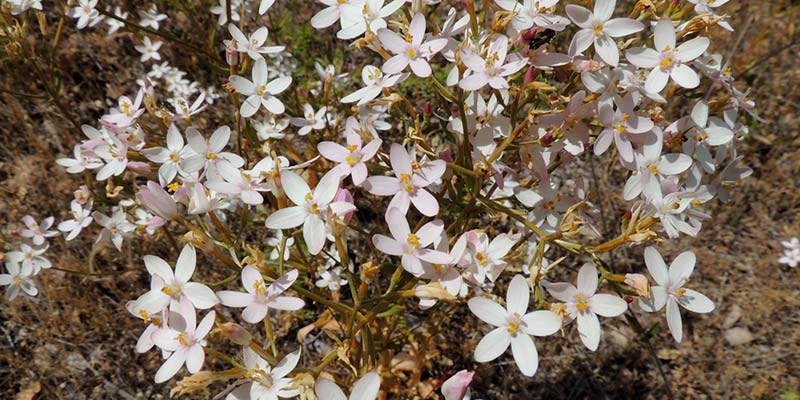
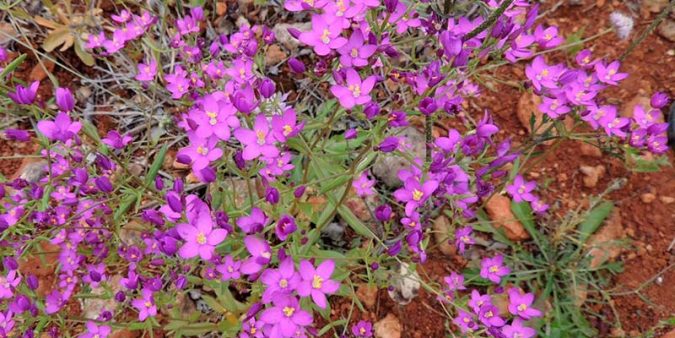
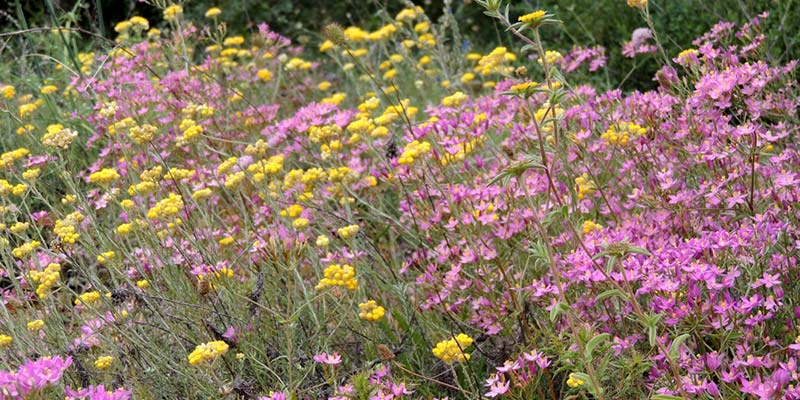
Sunday, May 21, however, was the official launch of the botanic garden, timed to celebrate World Biodiversity Day. The event was an unqualified success, and we were helped by Mother Nature who provided a cool grey day and glorious extensive pink carpets of Centaurium erythraea punctuated by the brilliant spring green effervescences of Cachrys sicula and Prangos trifida with the bright yellow of Helichrysum stoechas.
The whole effect was quite magical as some of the Prangos were yellowing or turning a soft bronze colour. This set against the different greens and greys of the olives and carobs, and the browns of the rocks combined to present the botanic garden at its lyrical best.
Before the tour of the garden, we were given an excellent talk in Portuguese, with English text slides, by Manuela David. She is director of the herbarium at the University of the Algarve in Faro and explained why our flora was so unique and why it needed to be valued and cared for. We were also shown some examples of the specimens of Barrocal flora kept in the herbarium.
Manuela was accompanied by the late Coronel Rosa Pinto and Dr Ricardo Canas, both authorities on local flora, and with Rosie leading the group, they contributed to making the tour more informative and interesting for our members and invited guests.
There was also a short presentation made by Rosie Peddle on behalf of MGAP, on the development of the botanic garden and our approach to the project. The 40 or so visitors appeared to enjoy the visit and, judging by the number of questions asked and answered, found the experience really stimulating.
During the tour of the garden, Manuela and Ricardo found a rare white representative of the Scabious family and, after heated discussion, it was identified as Lomelosia simplex subsp. dentata and a specimen was taken as our first contribution to the herbarium.
An excellent lunch was provided by the Quinta da Figueirinha. Celestino Ruivo provided dishes cooked by solar ovens and MGAP members brought home cooking which was served to a large group on the shady terrace of the main house.
This very pleasant social occasion reaffirmed MGAP’s role as a contributor to the total immersion mediterranean gardening experience.
By Burford Hurry
Posted by Rosie Peddle
February 2019