Garden Visits Spring 2019 – 3: Monchique
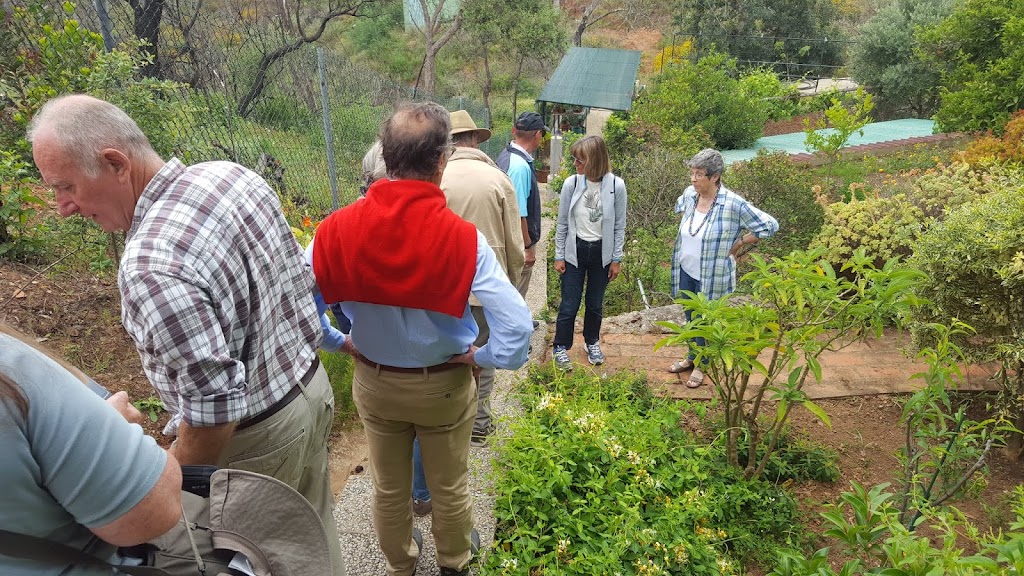
On May 7th, we visited a trio of gardens in Monchique. The gardens themselves were wonderful and worth visiting, but we also wanted to see how the fire in 2018 had affected the gardens and how they were recuperating. Although we had seen the fire on television and the smoke from afar, being there and seeing the aftermath and listening to the stories of evacuation and seeing the charred areas it passed through, brings home the horror and terror of it, as well as the destruction.
|
| Diana´s Garden |
|
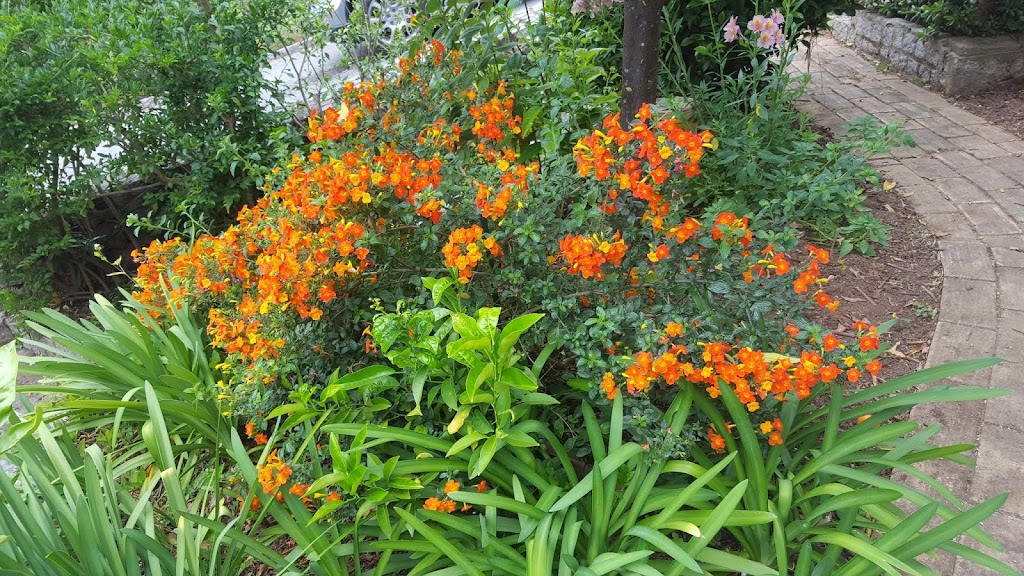
| Streptosolen jamesonii |
We followed the winding path, passing and – some of us jealously, living as we do on the chalky barrocal – admiring beautiful rhododendrons, azaleas and camellias as well as Mexican Orange (Choisya ternata), and a beautiful purple rose, to the bottom where Bryan has his propagation and nursery area as well as space for unusual fruit trees. We were amazed, too, at the size some of the plants had reached: a whole wall was covered in the grey succulent Graptoveria, and above it an Acanthus in full bloom spread over a wide area.
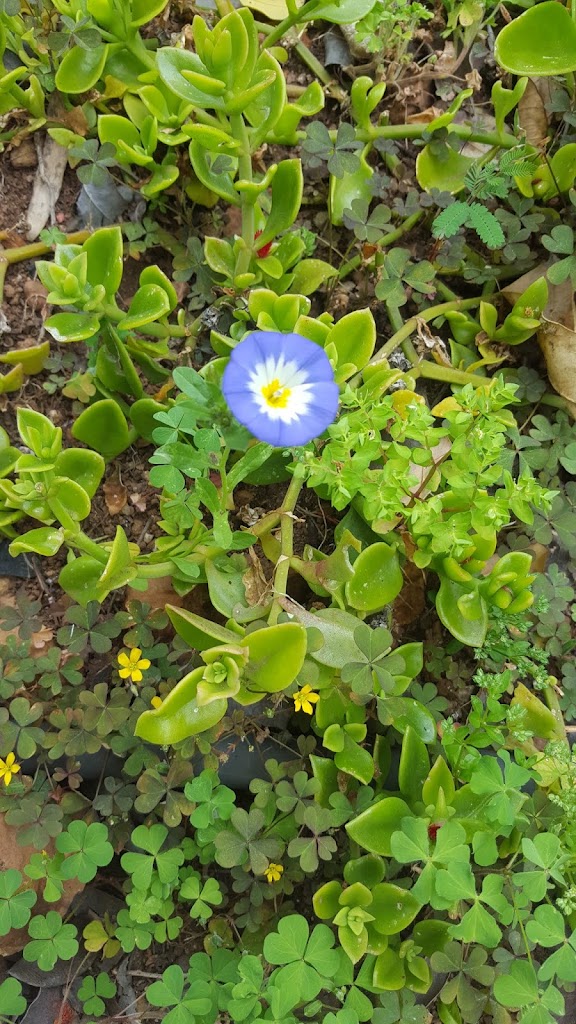
In contrast, a small blue and white Convulvulus
tricolor peeped out from the verdant growth. The garden
itself was largely spared from the fire, apart from a hedge down
one side and Bryan´s beds at the bottom, including some unusual
fruit trees, which were destroyed. Bryan discovered that the
thick layer of wood chippings he had applied as mulch were a
wonderful conduit for fire. Much had been replaced, apart from
the hedge. Some people had brought plants to contribute to a new
hedge, so in a year or two it should start to recover.
|
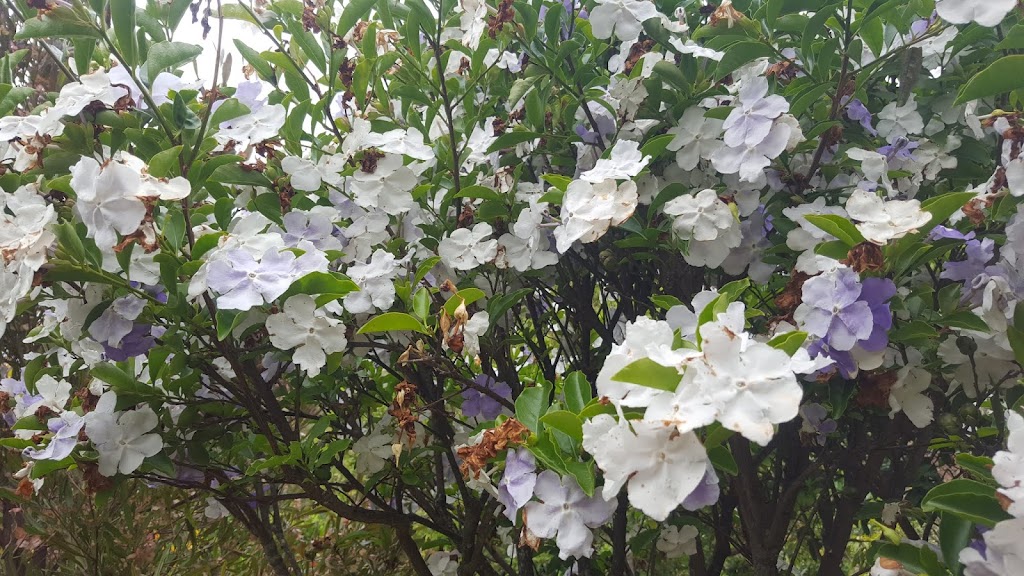
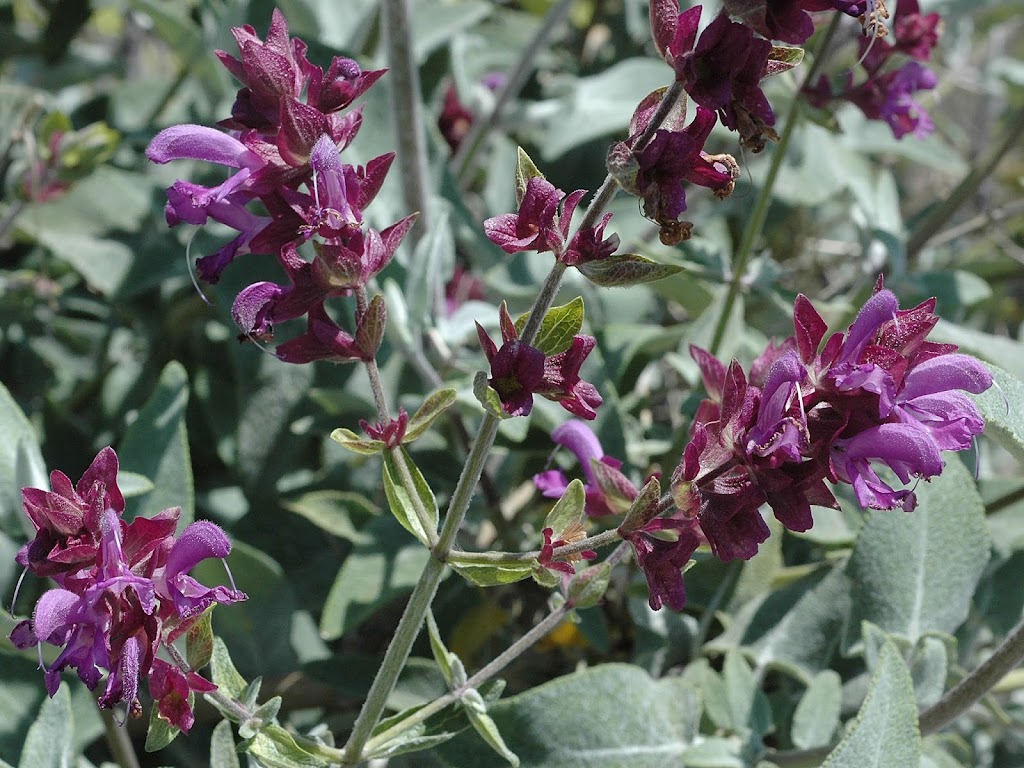
| Salvia canariensis |
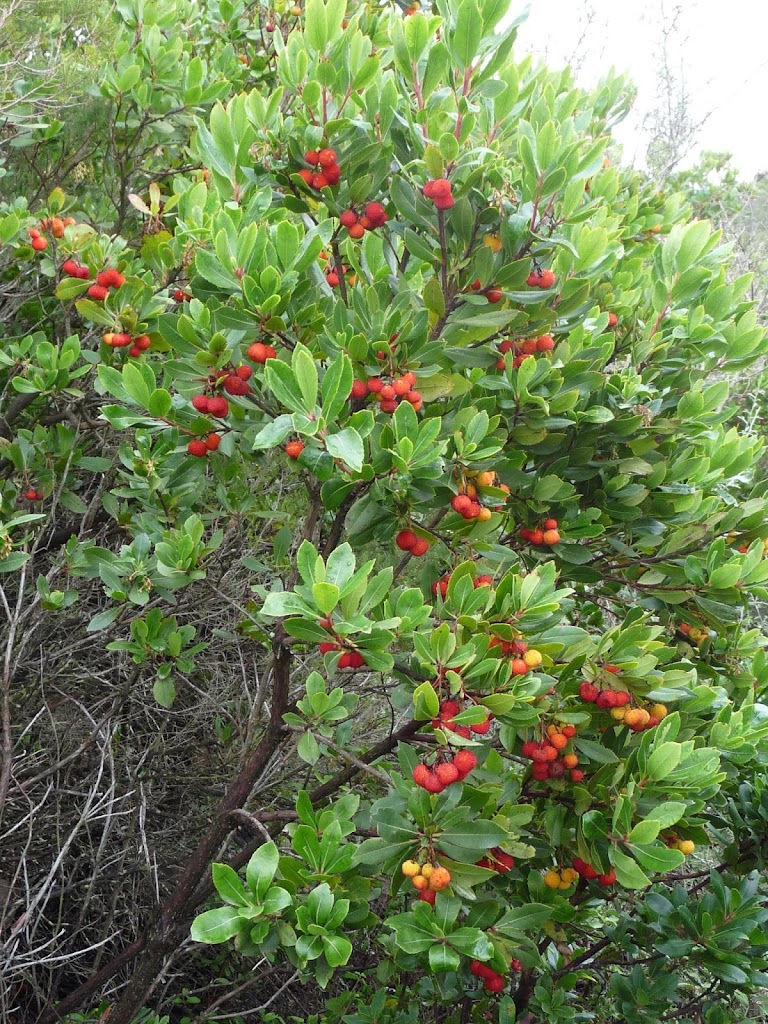
Finally, we visited the garden with the largest area and most devastation: Maddy Grossey´s garden had been surrounded and hidden by hundreds of trees. Now these were gone, her house was visible from the road below and all around. The whole hillside to the side of her house and below and opposite were bare. Maddy had already started a massive replanting programme here, using mainly carob (Ceratonia siliqua) and strawberry tree (Arbutus unedo), but the slope by the house she was going to replant with various plants and shrubs for colour.
|
| Arbutus unedo |
A new line of aloes had been planted to mark the border of her land and that belonging to the hotel until she decided what to put there more permanently. She too was missing the windbreak and several of her shrubs were showing signs of wind damage, so she was happy that some trees and shrubs were regrowing. Within the garden, damage had been patchy, as in Ian´s. Fire had licked through some areas, burning between trees, catching part of some, missing others, destroying some areas, leaving neighbouring ones untouched. There had been some beneficiaries of the newly opened spaces, though – Maddy said the wild flowers in spring had been amazing, and when we were there, whole areas were carpeted in nasturtiums. Nature always fills a vacuum. Around the house, the garden was full of colour and it would have been difficult to point out where the fire had hit. Nevertheless, some people had brought plants to fill the gaps, to which Ian had added some Japanese irises.
For all the devastation, it was good to see that the houses themselves were still standing and the people living in them unharmed, as were their animals, thanks to the bombeiros and in one case to some heroic driving to the house in the midst of the fire.Many thanks to Diane and Bryan, Ian and Diane and Maddy for making us so welcome and taking time to show us their gardens.
Tessa Hearn