Cupressus sempervirens, Italian cypress. An evergreen tree with a
distinctive upright narrow habit, native to western Asia and
south-eastern Europe, it has small glossy, dull grey cones. It is a
classic tree for use in gardens throughout the mediterranean.
When archaeologists examined the tomb of the 18th dynasty boy-king,
Tut’ankhamun (who died c. 1340 BC) they found that the outer coffin
was made of fragrant, red cypress wood that must have been
imported. (It was used for other Egyptian coffins of that period as
well.) The Phoenicians introduced the tree to the Mediterranean
when they settled in Cyprus. The Island, which actually worshipped
the tree, derives its name from the plant.
In both Greek and Roman mythology the cypress was associated with
the Underworld. The tree was also assigned to Aphrodite, the
goddess of love.
The Greek philosopher, Theophrastus (c.327-c.287) who studied under
Aristotle, mentions how the doors of a then recently constructed
temple were made from this wood that had been growing at Ephesus
(the Italian cypress wood had been felled ‘four generations’
earlier). The ancient Greeks also used it for building ships and
houses, as well as for carving statues (as did the Phoenicians and
Cretans) – and Dioscorides, the 1st Century Greek physician,
mentions its use in medicine for treating dysentery and other
ailments. The hard and durable wood was used for the gates of
Istanbul, and apparently it was also chosen for the original great
doors of St. Peter’s, Rome that are now made of bronze. In the past
the leaves and fruit of the Italian cypress were used, in infusion
with vinegar, as a black hair dye. Today the timber (which will
withstand woodworm) is sought after for works of art.
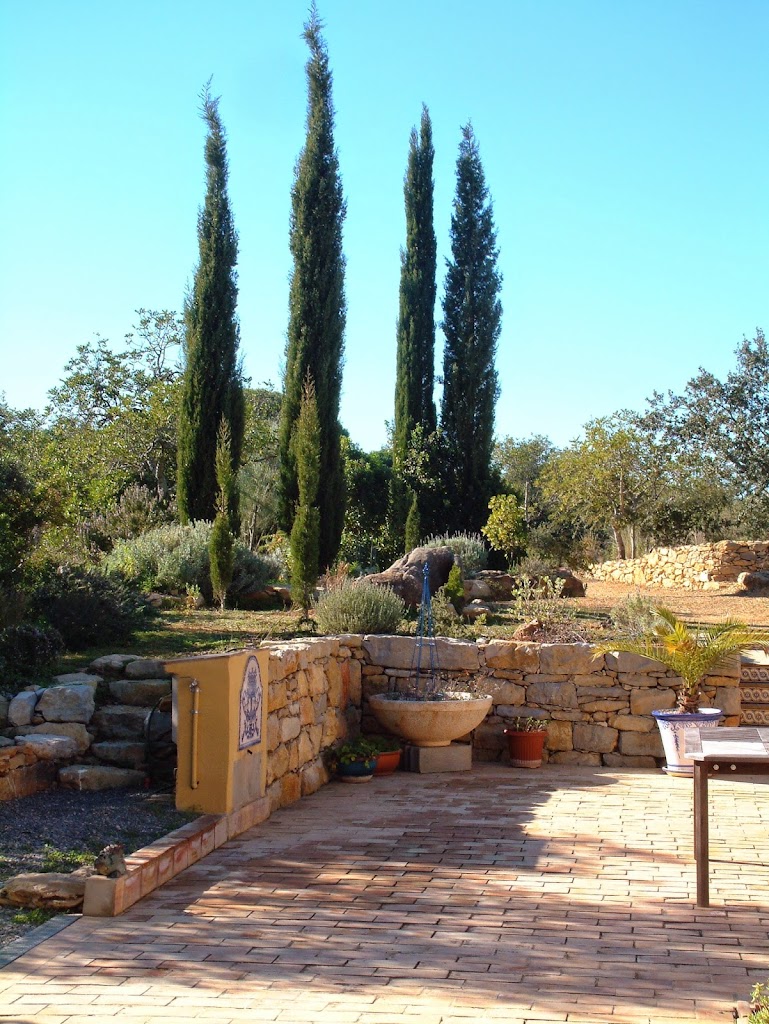 |
| Classic mediterranean garden trees for focus and height |
 |
| A glade of lovely cypress trees in a rocky landscape |