Fasciation – Plant Cresting

|
| Fasciated Echium plantagineum |
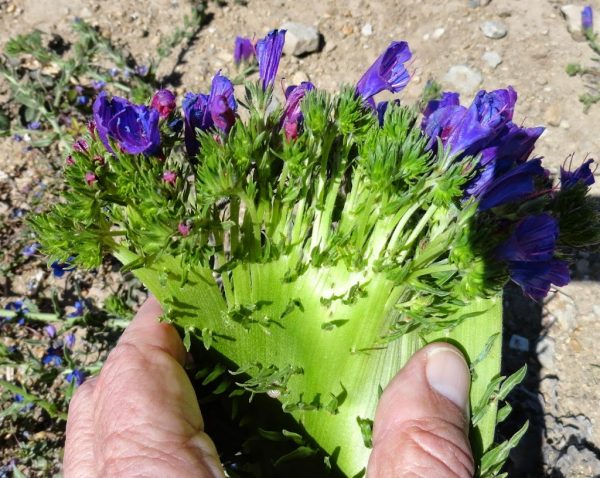 Fasciation
– why does it occur, and have you seen any examples ?
Martin Sirov has sent some wonderful photos of Echium
plantagineum he encountered on a recent walk in the Estoril
area. Have you seen this in other plants and do you have some
photos to share, there are some spectacular examples in the
Euphorbia and fern plant families and the long lived plants with
this characterisitic are much sought after.
WHAT IS FASCIATION?
Fasciation, sometimes known as ‘Cresting’, is an unusual phenomenon that occurs in plants. It is a relatively rare condition that affects vascular plants by causing abnormal growth in the growing tip – known as the meristem. The abnormal growth is usually concentrated around a single point and causes any new growth produced to be flattened, ribbon-like, crested, or elaborately contorted.
While this mutation can cause massive increases in weight and volume of the affected parts, the plant itself will continue to grow as per its normal lifecycle.
Any incidence of fasciation can be caused by one or more of the following factors factors:
Hormonal – caused by hormonal imbalances in the meristematic cells.
Genetic – caused by random genetic mutation
Bacterial – The bacteria Rhodococcus fascians has been shown to cause of fasciation in sweet peas but many fasciated plants have tested negative for the bacteria so this is not an exclusive cause.
Fungus – caused by specific fungal infections
Viral – caused by a specific virus
Environmental – caused by exposure to cold and frost
Physical damage – general damage to the growing tip for example – caused by biting insects or even chemical damage.
While fasciation itself is not contagious, if it has been caused by bacterial infection then it can be spread from infected to healthy plants through contact with wounds on infected plants. However the bacterial infection is more commonly passed through the uptake of infected water through the root system.
While indeed rare, fasciation has now been recorded on over 100 plant species.
With thanks to Simon Eade BSc(Hons) Horticulture www.seedsofeaden.com